
Our education
Raising children who keep trying, who are cheerful, and who think creatively
Children who keep trying
☆ Strength and perseverance in body and mind

Cheerful children
☆ Free and confident individuality

Creative children
☆ Warm hearts and rich creativity

What matters most is balance.
“Freedom” is not the same as “getting your own way”
Wakaba Kindergarten 50th anniversary video
What makes Wakaba special
A farm and outdoor play area, lunches planned by our own nutritionists, and three unique school buses.
01
“Waku Waku Hiroba,” our outdoor site
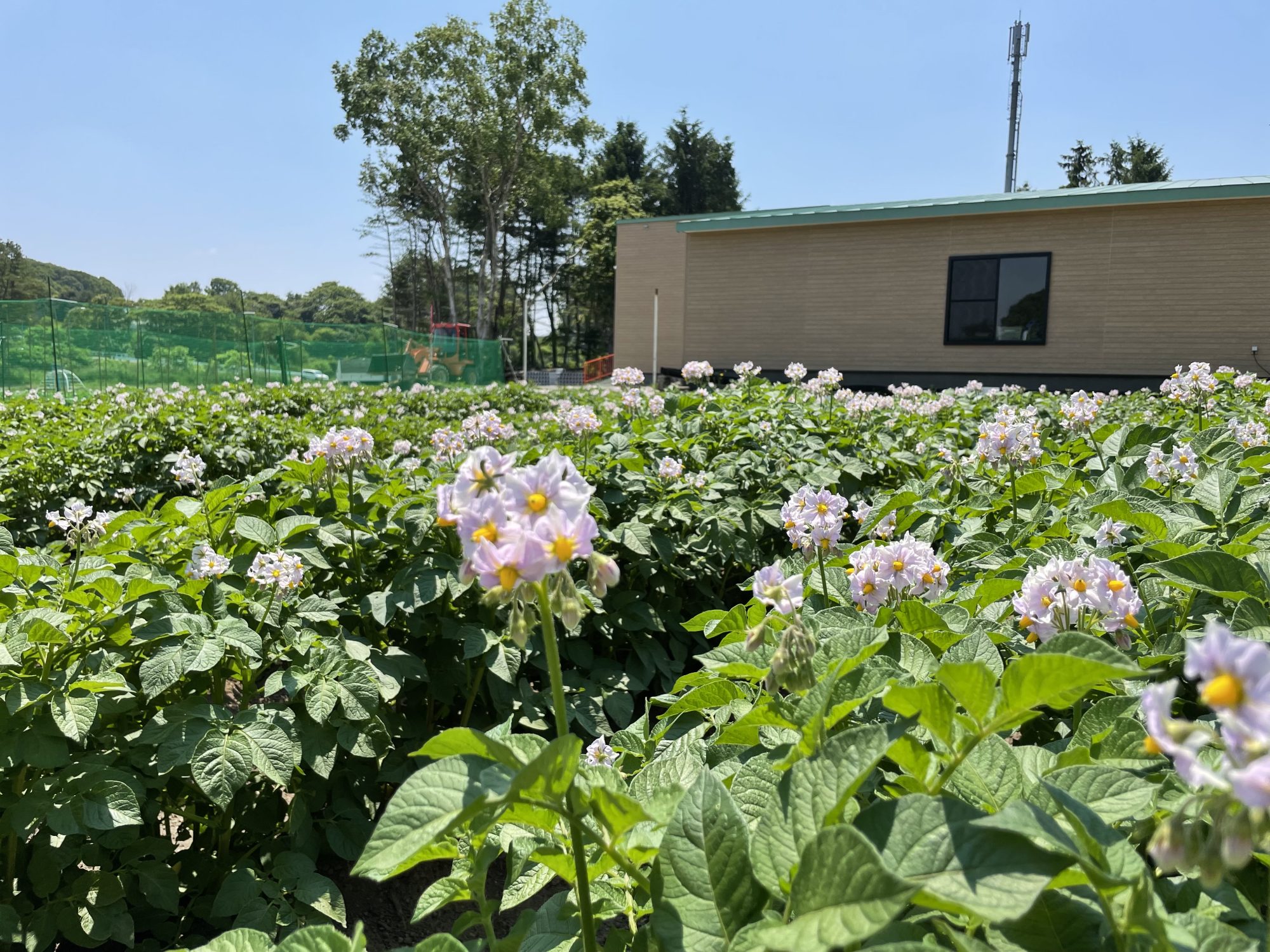
About 500 m from the kindergarten, we have our own site with a vegetable farm, playground equipment, a field, and a rest house. Children ride the school bus there to play.
Potato flowers bloom in the farm.
02
School lunch with a monthly theme
Our menus are planned by a registered dietitian and a nutritionist. Each month has a theme, such as popular children’s characters or local dishes from around Hokkaido, so children look forward to their meals.
Today’s menu is displayed every day at the entrance, at children’s eye level. Lunch is provided every day, and we have a procedure for food allergies.
03
Our unique school buses
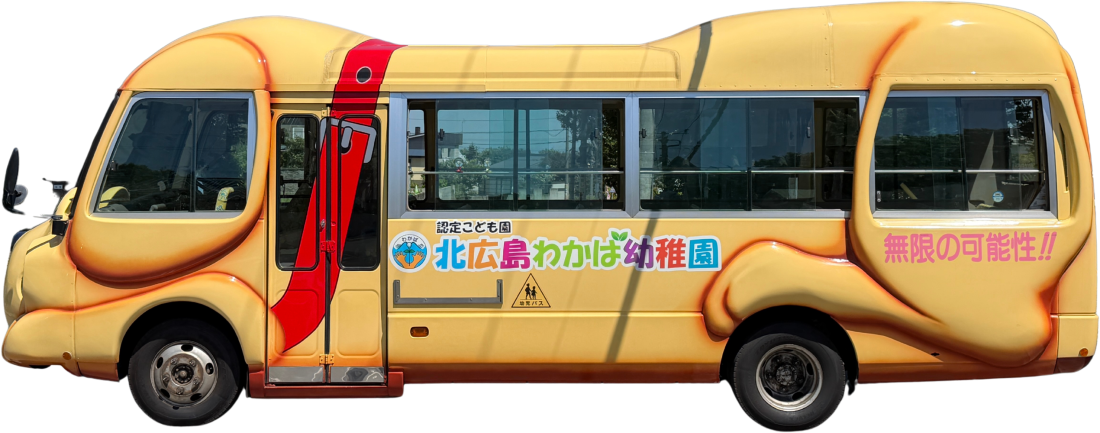
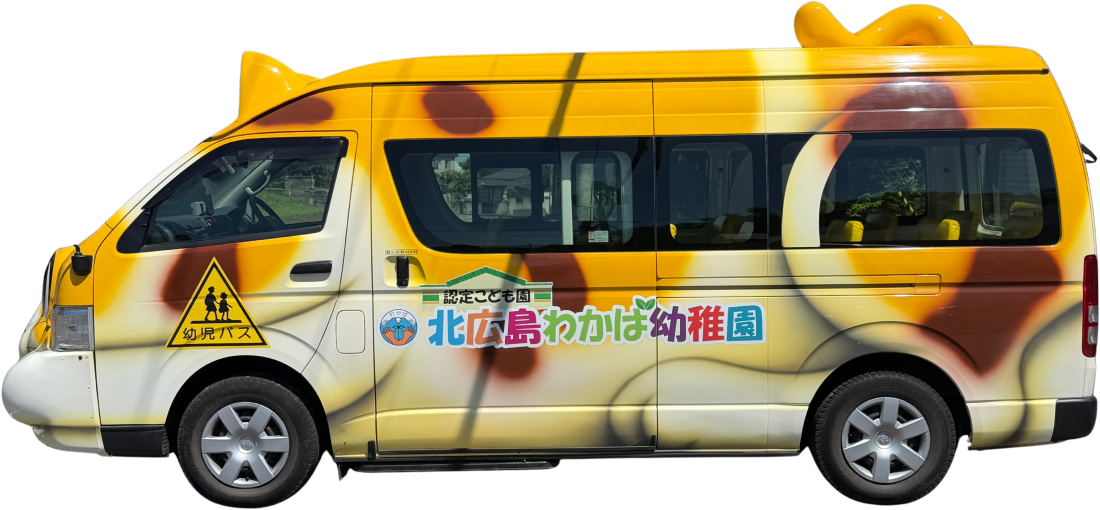
Three buses take children to and from school: the Dog Bus, the Cat Bus, and the Train Bus.
Children who do not use the bus service also ride them when we go to Waku Waku Hiroba or on field trips.
04
Solar power
After the 2018 blackout across Hokkaido, we installed solar panels and storage batteries so that part of the school can keep running during a power outage.
So that children can stay safe and calm, even in an emergency.
05
Check-in with a card
Children’s arrival and departure are recorded by touching a card to a reader. You can see how it works in the video below.
Come and see us
The best way to understand our school is to visit. Please feel free to contact us.
Our playgroundAnnual eventsContact us by emailAdmission & fees